The 30-minute meter test, start to finish
Short answer: shut off all water, read the meter, wait, and read it again. If the digits or the small leak indicator moved, water is going somewhere. Plan on 30 minutes, and do it when nobody is showering, running the dishwasher, or filling a washing machine.
Most residential meters sit in a ground-level box near the street, often under a lid you pry up with a screwdriver. Wear gloves, and check the box for spiders or fire ants before reaching in.
Stop all water use
Turn off faucets, the ice maker, irrigation, and any softener regeneration. Flush no toilets during the test.
Find the leak indicator
Many meters have a small triangle or star dial that spins at the slightest flow. If it turns, water is moving.
Record the reading
Write down every digit on the register, or take a photo with the time stamped.
Wait 30 minutes
Leave everything off. A longer wait of one to two hours catches slower leaks.
Read it again
Any change in the digits or a still-turning dial means a leak somewhere past the meter.
Reading what the meter tells you
| What you see | What it usually means | Where to look next |
|---|---|---|
| Dial still, digits unchanged. | No leak running right now. | Check for slow fixture drips. |
| Dial creeps slowly. | Small leak, often a toilet flapper. | Do the toilet dye test. |
| Dial spins steadily. | Larger leak or running fixture. | Isolate with the main shut-off. |
| Digits advance with shut-off closed. | Leak is between the meter and your valve. | Look for wet ground in the yard. |
The next step is isolation. Close your home's main shut-off valve and watch the meter again. If it still moves, the leak is on the supply line between the meter and the house, often buried and often wet at the surface.
If the meter stops when you close the main, the leak sits inside the home or beyond the valve. That is where the toilet and fixture checks come in.
Test says you have a leak?
Call the 24/7 line, describe the meter result, and ask about pinpointing the leak before anything gets opened up.
Toilets cause more false alarms than pipes
A worn flapper can leak silently into the bowl, and the meter will happily record it. Put a few drops of food coloring in the tank, wait 15 minutes without flushing, and look in the bowl. Color in the bowl means the flapper or fill valve is leaking.
Other quiet culprits include a dripping outdoor spigot, a stuck irrigation zone valve, and a water heater relief valve that weeps through its discharge pipe. Walk around the yard after rain stops, too, since a soft, green patch of lawn can be a supply leak.
- Toilet tank: dye test with food coloring, 15 minutes, no flush.
- Outdoor faucets and hose bibs: check for drips or a wet wall below them.
- Water heater: look at the relief valve discharge pipe for moisture.
- Irrigation: shut off the system's supply valve and retest the meter.
- Yard: look for soft ground, a sunken spot, or unusually green grass near the line.
Lynn Haven's water system and where your responsibility starts
The City of Lynn Haven runs its own water system. Its Public Utilities Department at 1111 Ohio Avenue handles utility questions on weekdays, per the city's website. If you are a Bay County Utilities customer in the area, the county has its own leak and emergency line for county water customers only.
Why does that matter for a meter test? The utility generally owns the meter, and you typically own the pipe past it. So a leak on the house side is your repair, while a leak at the meter itself is something to report to your utility. Call 811 before any digging to fix a buried line.
When a meter test is not enough
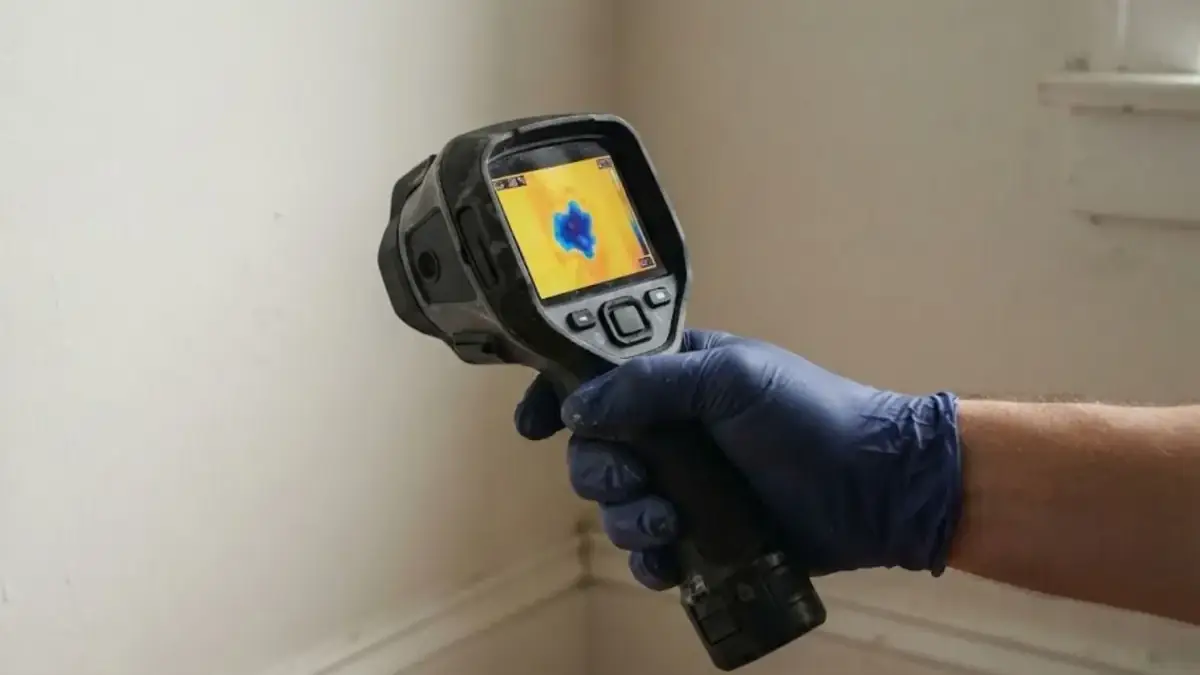
A meter test says a leak exists, not where it is. For slab and underground leaks, plumbers use an acoustic ground microphone to hear water escaping, a thermal camera to spot warm patches on a slab, and tracer gas for hard cases. Many Gulf Coast homes sit on concrete slabs, so a leak under the floor is a real possibility.
Signs of a slab leak include a warm spot on a floor, a constantly running water heater, and a hissing sound with fixtures off. If you see any of those, skip more guessing and bring in leak detection before a small leak soaks the subfloor.
Costs, insurance, and what to do next
A homeowner policy often covers sudden, accidental discharge but not long-term seepage or wear, so check your policy before you file anything. Keep your meter readings, photos, and dates, because they help any claim and tell a plumber how long water has been escaping.
If the leak is in the yard line, a licensed plumber may recommend burst pipe repair for the damaged section. Folks in Southport and Panama City can use the same meter test, since the method works on any household meter.
Standards and meters
Household water meters are built to AWWA standards, which is why the low-flow dial can show very small leaks. Read your own meter according to the utility's instructions and report what you see to a plumber.
Frequently asked questions
Thirty minutes catches most active leaks. For a slow drip, leave everything off for one to two hours or overnight, then compare the two readings.
Something is using water. The usual suspects are a toilet flapper, an irrigation valve, or a pipe leak between the meter and the house. The main shut-off test tells you which side.
You can look for signs like unexplained high bills, damp spots, or a hissing sound. The meter is far more reliable, though, because it measures flow directly.
For the meter box or the pipe up to it, contact your water utility. In Lynn Haven that is typically the city's Public Utilities Department, unless you are a county water customer. For the pipe past the meter, a plumber handles it.
It confirms water is escaping but cannot locate the leak. Pinpointing a slab leak takes listening gear or a thermal camera, so a plumber is the next step.