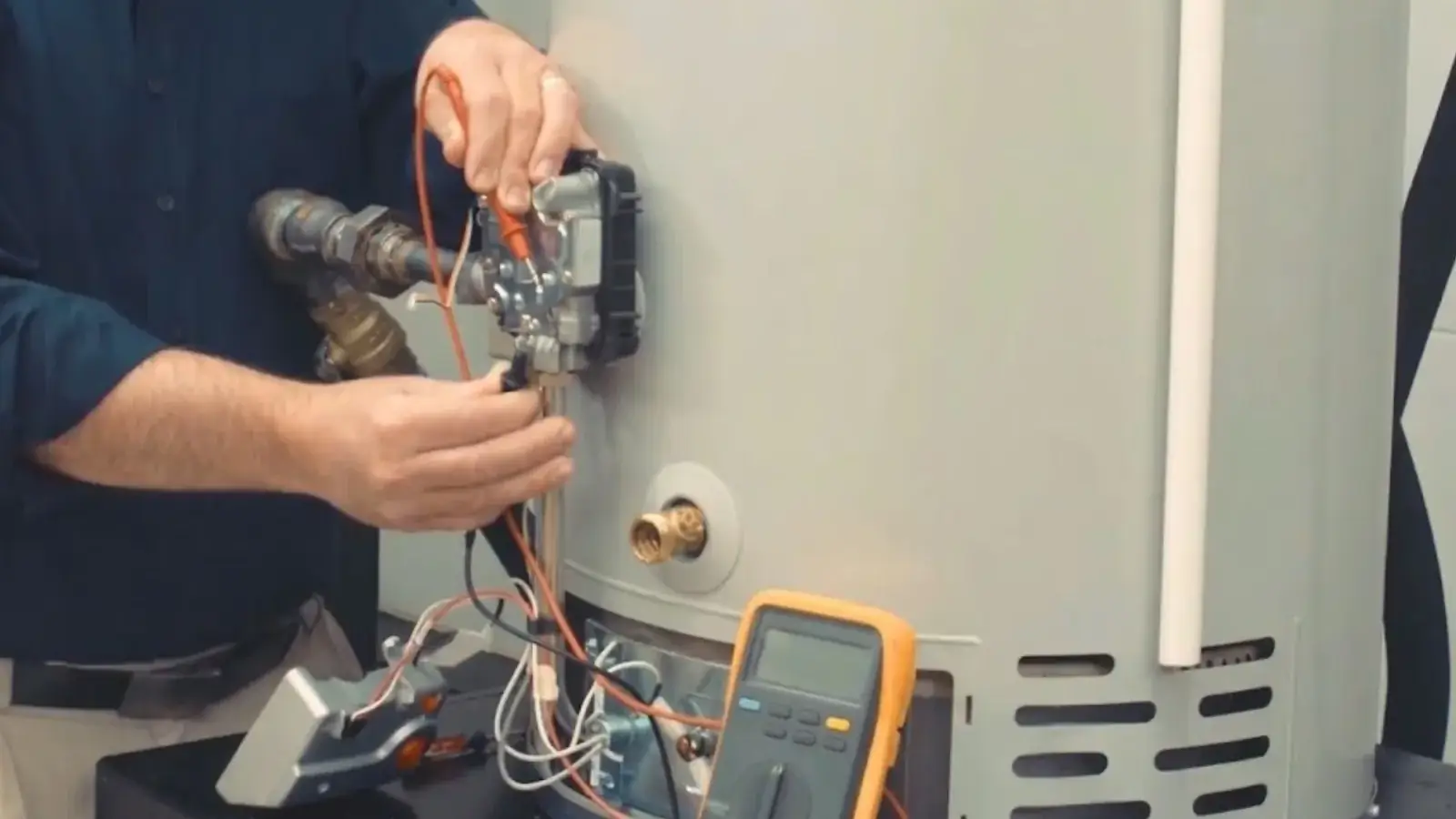
Water heater emergency or just a fault? Start with what you see
When a water heater quits, emergency water heater repair in Lynn Haven, FL starts with a phone call. The line is open 24/7, and the more you can describe, the better the plumber can prepare. While you wait, keep the family out of any standing water near the tank.
Most faults fall into three groups: no heat, not enough heat, or water where it should not be. Each group has its own likely causes, listed below.
| Symptom | Common cause | Fix type |
|---|---|---|
| No hot water at all, electric. | Tripped breaker, failed upper element or high-limit reset. | Test and replace part. |
| No hot water, gas. | Pilot out, thermocouple worn or gas control valve fault. | Relight and replace part. |
| Hot water runs out fast. | Lower element failed or sediment layer in tank. | Element or flush. |
| Rumbling or popping noises. | Hardened sediment at the tank floor. | Flush, assess tank age. |
| Water at the base. | Fitting, drain valve, or tank wall failure. | Fitting fix or replace. |
| Rotten egg smell. | Reaction in the tank with anode rod. | Rod swap and flush. |
Gas water heater or electric: how repairs differ
A gas heater relies on a burner, a thermocouple or flame sensor, and a gas control valve. A pilot that keeps blowing out often points to a worn thermocouple or a draft problem at the vent.
An electric heater uses two heating elements and two thermostats, and the upper one controls the lower. A plumber tests each with a multimeter before replacing anything, which avoids guessing at parts.
Hybrid heat pump models add a compressor and fan, and some show error codes on a display. Mention any code when you call, because the manual for that code tells the plumber where to start.
Cold water and no idea why?
Describe the symptom to the dispatcher. Many heater faults are a part, not a new tank, and same-day visits are booked when schedules allow.
Safety steps while you wait
A water heater holds hot water under pressure, so treat a fault with care. These actions are safe for most homeowners:
- Turn the power breaker off for an electric unit, or the gas valve to off for a gas unit.
- Close the cold supply valve if water is leaking.
- Leave the relief valve alone, and keep kids and pets away from its discharge pipe.
- If you smell gas, leave at once and call 911 or the gas utility before anything else.
- Photograph the data plate showing model, size and age for the dispatcher.
The repairs plumbers do most often
A few parts account for most no-heat calls. Knowing them helps you judge a quote when it comes.
Heating element
Screws into the tank wall. The plumber drains the tank first, then swaps the failed element and checks the thermostat.
Thermostat and high-limit
A tripped limit switch or stuck thermostat can leave an electric tank cold even with good elements.
Thermocouple or flame sensor
Gas pilots depend on this part to prove flame. Soot and age are the usual reasons it fails.
Anode rod
A sacrificial rod that corrodes so the tank does not. Replacing it can add life to a younger tank.
T&P relief valve
A safety valve. If it drips, the cause may be high pressure, so the plumber checks thermal expansion too.
When repair stops making sense
A tank past about 10 years with a leak in its body is not a repair job. Spending money on a heater that is already rusting from inside tends to waste a service call.
If the problem is the tank itself, the fastest route is emergency water heater replacement. If the heater is fine but a pipe near it is wet, leak detection finds the source without tearing out drywall.
What affects the repair bill
Cost guides give wide ranges, so we do not post a number here. Four things move the total:
- The failed part and whether it is stocked on the truck or needs ordering.
- Whether the heater is gas, electric or hybrid, since parts and labor differ.
- Access to the unit, such as an attic platform or a tight closet.
- Tank age, which decides if a repair is worth doing at all.
Home insurance may cover sudden water damage, but rarely the heater itself when it wore out, so check your policy. Call the 24/7 line for a number based on your unit.
Safety devices and standards
The temperature and pressure relief valve on a gas storage heater is built to ANSI Z21.22, and the heater itself to ANSI Z21.10.1. Never cap or plug a relief valve. A plumber who sees a relief valve that drips often will check the tank pressure and water temperature.
Frequently asked questions
Yes, the dispatch line is open around the clock. After-hours calls are booked like any other, and the dispatcher tells you what to shut off while a plumber is lined up.
A worn thermocouple, a dirty pilot assembly or a draft pulling at the flame are the usual suspects. A plumber can test the thermocouple output and clean the burner area.
On an electric tank, a burned-out element is common. On gas, sediment or a weak burner can cut heat. A thermostat set too low is worth checking before you call.
A steady drip is not normal. It can mean pressure is climbing from heat expansion or the valve itself has worn. Have a plumber check it, and never cap the line.
Tankless units are covered on a separate page. See tankless water heater service for flushing, error codes and repairs.
About 120 F is a common safety recommendation, since hotter water raises scald risk. Some households raise it temporarily for a dishwasher, then lower it again.