The honest truth about baking soda and vinegar
Baking soda and vinegar rarely clear a real clog. The fizz is a reaction that makes mostly water, carbon dioxide, and a little sodium acetate. It can freshen a drain and loosen a thin film of soap, but it cannot dissolve a hairball, a wad of grease, or a stuck object.
If a drain is merely slow with a faint smell, this combination is harmless to try. If the sink is full and not moving, skip it and use something that physically removes the blockage.
What actually works, in order of escalation
Plunger first
A cup plunger on a sink or tub, with a wet seal and a firm push-pull, moves most soft clogs. Block the overflow opening with a damp cloth.
Hand removal of the visible mess
Lift the stopper and pull hair from the strainer. Many tub clogs sit within reach.
Boiling water, with limits
Hot water can melt grease in a metal pipe. See the safety limits below.
Hand drain snake
A 25-foot hand snake reaches typical sink and tub traps. Feed it gently, turn the handle, and pull the blockage out.
Stop and call
If water still will not drain after a snake, the clog is deeper than a household tool can reach.
Drain still stuck after the basics?
Call the 24/7 line and describe what you have tried so the plumber arrives with the right tool.
Safety limits you should respect
| Method | Safe for | Do not use on |
|---|---|---|
| Boiling water | Metal pipes, stainless sinks. | PVC joints, porcelain toilets and tubs, cracked fixtures. |
| Plunger | Sinks, tubs, showers. | A toilet with a full bowl of chemical opener. |
| Hand snake | Traps and short runs. | Garbage disposals, or past an elbow with force. |
| Baking soda and vinegar. | Mild odor, light film. | Anything fully blocked. |
| Enzyme cleaner | Slow-building grease and organic film. | Quick fixes, since it works over days. |
Never pour boiling water into PVC drain joints or a porcelain bowl. PVC softens and can loosen at a glued joint, and porcelain can crack from thermal shock. Hot tap water is a safer choice for plastic pipes.
Never mix a chemical drain cleaner with vinegar, bleach, or another product. The fumes can be dangerous, and the splashback can burn skin.
Chemicals, septic tanks, and the city sewer
Chemical openers rely on caustic lye or acid. They can eat into old metal pipes and leave a standing pool of hazardous liquid that a plumber then has to work through. Enzyme cleaners are the gentler option and suit slow, grease-related drains.
In Lynn Haven, the city's Public Utilities Department runs the sewer plant, and a Florida DEP report from October 2021 described stormwater entering the city's gravity sewer system. Heavy chemicals add nothing to a stressed system. Some homes in nearby Southport still use septic tanks, where harsh chemicals can harm the bacteria that break down waste.
Prevention that costs almost nothing
Most household clogs are habits. Grease poured down a kitchen sink cools and coats the pipe wall. Hair and soap build up in tub traps. Wipes sold as flushable do not break down like toilet paper.
A weekly flush of hot tap water helps, as does a mesh strainer in the shower. Collect cooking grease in a can and throw it out with the trash.
- Mesh strainers in tub, shower, and kitchen sink.
- A can for cooking grease, not the drain.
- Wipes, paper towels, and cotton swabs go in the trash.
- A monthly enzyme treatment on slow kitchen lines.
- Run hot tap water after each load of dishes.
Match the fix to the cause
Different clogs respond to different tools. Grease hardens as it cools, so heat helps only if the pipe is metal and the plug is near the opening. Hair knots around the stopper or in the trap, and only a hook, strainer pull, or snake lifts it out.
Soap scum builds as a gray paste that narrows the pipe over months. Food scraps in a kitchen line can combine with grease into a plug that a plunger will not move. Naming the cause saves you from pouring the wrong thing down the wrong drain.
| Where it is | Common cause | Best first move |
|---|---|---|
| Bathroom sink | Hair and soap film. | Pull the stopper, clean the trap. |
| Tub or shower. | Hair mat above the trap. | Hook or hand snake. |
| Kitchen sink | Grease and food bits. | Plunger, then snake. |
| Toilet | Too much paper or a wipe. | Flange plunger, then closet auger. |
| Several fixtures at once. | Main line blockage. | Stop and call a plumber. |
A toilet needs its own tools. Use a flange plunger with a rubber flap, not a flat cup, and a closet auger with a protective sleeve to avoid scratching the porcelain.
When a clog is not a clog
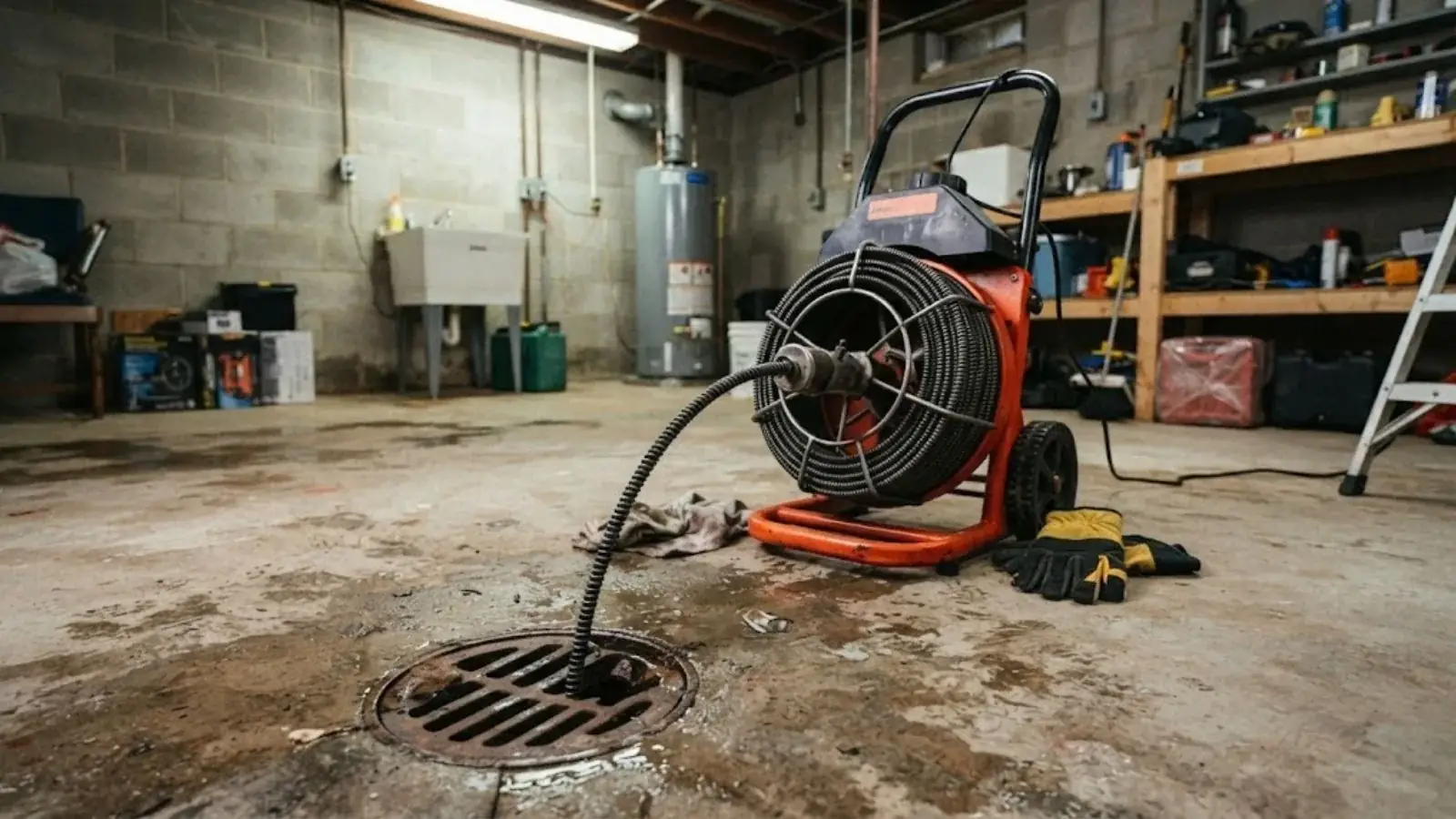
If every drain in the house is slow, or a toilet bubbles when a sink empties, the problem is probably the main line and not a trap. A cable machine or a hydro jet is the right tool, and drain cleaning from a plumber handles it in one visit.
Roots, bellied pipe, and collapsed sections need a camera. A sewer camera inspection shows what is wrong before anyone starts digging. Homeowners in Callaway and Springfield can call the same line for a drain that will not clear.
Standards for pipe and drain materials
Drain pipes are made to standards such as ASTM D2665 for PVC drain pipe, which is why hot tap water is fine but boiling water on glued joints is not. Check what your drain is made of before you try a home remedy.
Frequently asked questions
Rarely. It can freshen a drain and loosen light film, but it will not clear a hairball or grease plug. A plunger or snake does the real work.
No. It is fine for metal pipes and metal sinks, but it can soften PVC joints and crack porcelain. When unsure of your pipe material, use hot tap water instead.
On a sink or tub trap, yes, if you go gently and stop at resistance you cannot turn through. Do not force one into a garbage disposal or a toilet without the right auger.
They add little and can damage older pipes. The city's gravity sewer has already dealt with stormwater strain, so physical clearing with a plunger, snake, or plumber is the better route.
Call when more than one fixture is slow, when water backs up from a floor drain or toilet, or when a snake does not clear it.