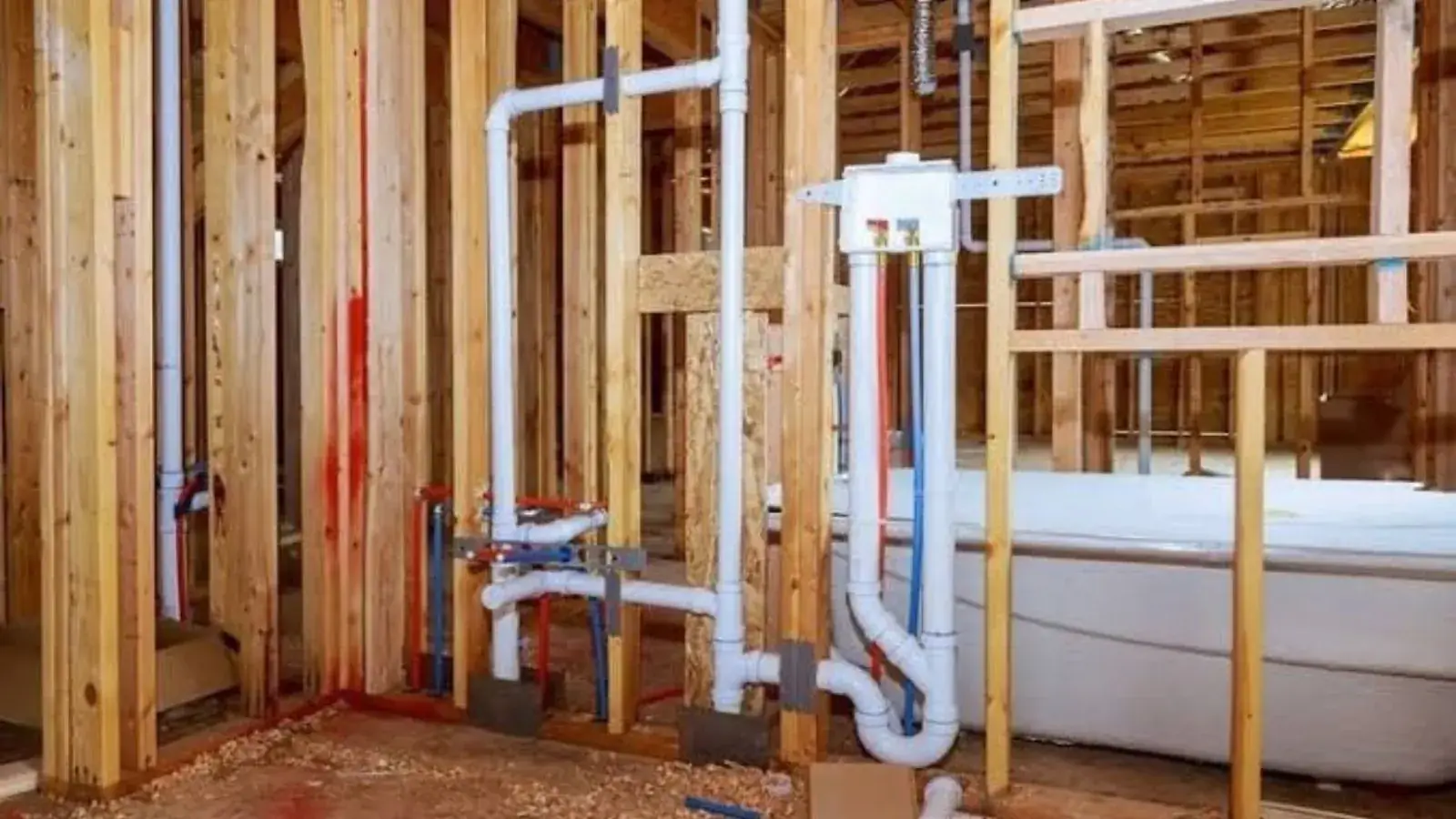
What plumbing installation covers
Plumbing installation in Lynn Haven, FL covers new fixtures, new supply and drain runs, and the vent piping that makes them work. Most jobs fall into replacing an old fixture, adding a new one, or roughing in a bathroom or kitchen before the walls are finished.
It is a planned job, so the dispatcher books it in a daytime window rather than as an emergency visit. If water is already leaking, use the 24/7 line and ask for a repair instead.
Material choices matter early. PEX and copper are the common supply materials today, PVC is typical for drains and vents, and the choice affects cost, fittings and how the lines are routed through framing.
Fixtures and the work behind them
| Fixture | What the plumber installs | Behind the wall |
|---|---|---|
| Kitchen sink and faucet. | Basin, faucet, supply stops, strainer and trap. | Drain, vent and hot and cold lines. |
| Toilet | Bowl, wax or foam seal, closet bolts, supply line. | Flange, 3 or 4 inch drain, vent. |
| Shower or tub. | Valve, trim, drain and overflow. | Rough-in valve body, pan or liner, drain. |
| Bathroom vanity | Faucet, pop-up drain, trap, stops. | Supply stubs, drain stub, vent. |
| Washer connection | Box, valves, standpipe and trap. | Supply stubs, 2 inch drain and vent. |
| Outdoor hose bib. | Frost-free or standard bib, shutoff. | Supply tap and sleeve through the wall. |
Ready to price a new installation?
Call and describe the fixtures, the room, and whether walls are open. The dispatcher will line up a visit.
Rough-in: the part nobody sees
Rough-in is the pipework set before walls and floors are closed. Drains need slope, usually a quarter inch per foot on smaller lines, and every fixture needs a vent to keep traps from siphoning.
Supply lines are run in PEX or copper, the fixture locations are marked off the floor plan, and the stub-outs are pressure-tested before inspection. A hydrostatic test holds pressure in the pipes so a missed fitting shows up while the wall is still open.
On a slab home, a new bathroom drain may require cutting concrete, which is why the layout should be settled first. Toilet and fixture-specific details appear on the toilet repair and installation and faucet and sink repair pages.
Permits, inspections and the Florida code
Plumbing work in Florida follows the Florida Building Code, Plumbing. Whether a given job needs a permit varies, so ask the Lynn Haven building department, which sits at 817 Ohio Avenue and takes applications and inspection requests by email.
The city says processing can take up to 24 business hours. A licensed plumber handles the paperwork for a job that needs it, and you can confirm any plumber's license on MyFloridaLicense.com.
If the project connects to city water or sewer for the first time, the city asks for a Water and Sewer Availability form. Call 811 before any digging so buried lines are marked.
Before the installer arrives: a prep checklist
- Know which fixtures are going where and mark them on a sketch.
- Have the fixtures on site, with the model numbers, before the visit.
- Clear the work area and the path to the water shutoff.
- Decide on the final finish heights for the vanity, sink and shower trim.
- Note whether the home is on a slab or a crawl space.
- Ask about permit paperwork before the work date, not after.
What shapes the cost of an installation
- Number of fixtures and how far each sits from existing lines.
- Supply material, PEX or copper, and the pipe size.
- Access: open walls, attic, crawl space or slab.
- Permit and inspection items for the job.
- Quality and brand of the fixtures you choose.
Insurance does not usually cover planned installations, only sudden, accidental damage, so check your policy. For your real number, call the 24/7 line. Water heaters have their own pages, such as water heater installation for planned swaps.
Frequently asked questions
Permit rules vary by job, so ask the Lynn Haven building department. A licensed plumber can tell you what they usually see needed.
Usually yes. Tell the dispatcher the make and model, and keep the box and manual so the right supply lines and parts come along.
Rough-in is the pipe inside walls and floors. Finish plumbing is installing the visible fixtures, such as faucets, toilets and shower trim.
It depends on slab or crawl space access and the number of fixtures. The plumber gives a time estimate after seeing the layout.
Often yes, but drain slope and venting limit the move. The plumber checks the existing lines before promising a layout.
Water heaters have their own pages. For gas piping, ask the dispatcher when you call. If you ever smell gas, leave the building and call 911 or the gas utility before calling a plumber.