Test your own tap before you buy a softener
A softener only helps if your water actually has the problem it solves. The city of Lynn Haven's annual water quality report does not list hardness, so you cannot rely on it to decide. Test your own tap instead, and bring the result to the plumber.
Water softener and filtration in Lynn Haven, FL is a local question, because the city's water comes from five wells in the Floridan Aquifer, with surface water purchased from Bay County Utilities serving the remaining area.
Collect a sample
Run cold water for a minute, then fill a clean container from a kitchen tap that has not been treated.
Use a test
Hardness strips are cheap and quick. A lab test gives a number you can trust for sizing.
Read the city report
The 2024 report lists the chlorine residual. It averaged 1.5 ppm, which is useful for filter choice.
Compare symptoms
Match what you see at fixtures with the signs below, then call with your result.
Signs your water may need treatment
White crust on fixtures
Crust on faucets, showerheads and kettles often points to mineral scale. A test confirms it.
Spots on glasses and tile
Dishes that come out of the washer cloudy can indicate mineral content or detergent issues.
Dry skin or soap that will not lather
Soap film in the shower is a classic effect of mineral-rich water.
Chlorine smell or taste
That is a filtration question, not a softening one. Carbon filters target taste and odor.
Slow water heater recovery
Scale on heating elements and tank bottoms cuts efficiency over time.
A softener does not remove chlorine, and a filter does not stop scale. Knowing which problem you have saves money.
Want the system checked before a quote?
Call the line and describe what your softener or filter is doing. A visit can review the whole setup before any price is set.
Softener, filter or reverse osmosis: which fits
| System | Targets | Where it sits |
|---|---|---|
| Salt-based softener. | Mineral scale from hard water. | At the main, usually near the water heater. |
| Whole-house carbon filter. | Chlorine taste and odor, some sediment. | At the main, before the heater. |
| Sediment pre-filter. | Grit, rust flakes and particles. | At the main, ahead of other treatment. |
| Reverse osmosis. | Drinking water at one tap. | Under the kitchen sink. |
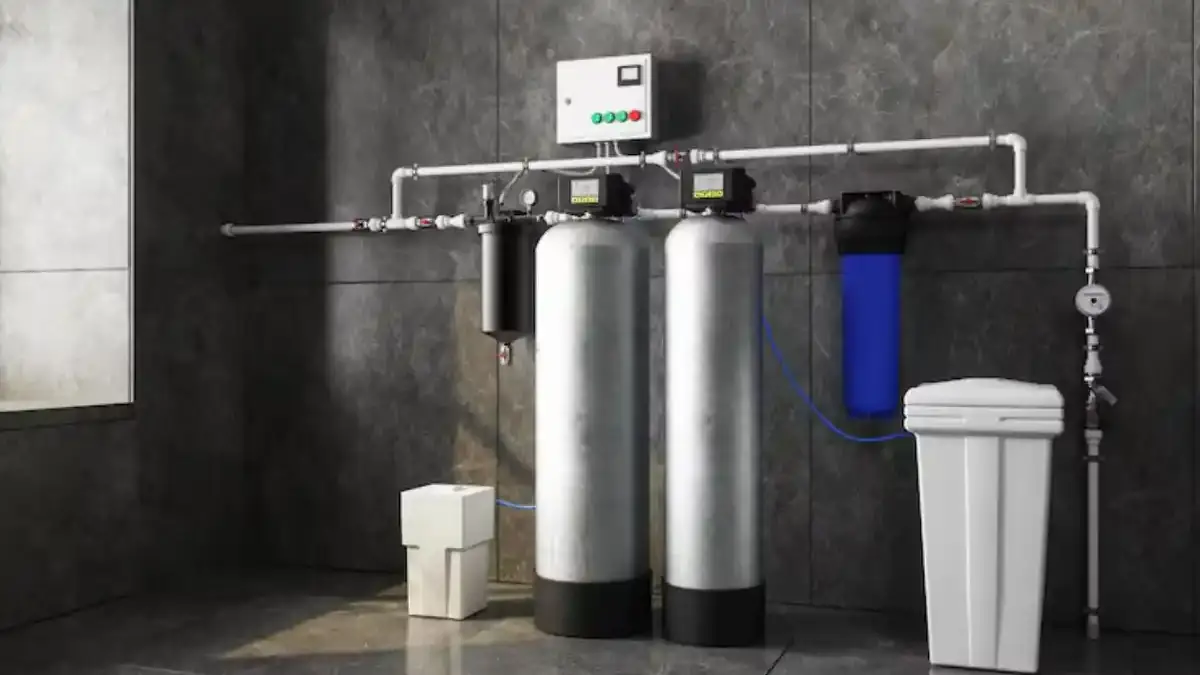
Many homes use a mix, such as a sediment filter and carbon filter at the main and reverse osmosis at the kitchen sink. The plumber matches the layout to your test results.
What a softener or filter installation involves
Systems tie into the main water line, so the job needs a shutoff, new fittings and a bypass valve. A softener also needs a drain connection for regeneration and a spot for the salt tank. Placement near the water heater is common, but you want room to service it.
The plumber checks the line pressure, the available space and local rules. Permit requirements vary, so ask the Lynn Haven building department. After installation, the system is flushed, set to your water test and explained so you know what to refill.
Softener or filter not working right
Many repair calls start with a vague symptom, such as the system is not working or the water feels the same as before. A plumber checks the whole setup before quoting a price.
Common causes include a salt bridge in the brine tank, a stuck or clogged control valve, a failed drain line and exhausted resin. On filters, a clogged cartridge or a lost bypass setting is often the cause. If scale has already built up on a water heater, flushing or replacing that tank may come into the conversation.
What affects the cost
Pricing follows the setup, not a flat list. These factors apply to installs and repairs.
- System type and capacity, matched to household size and your test results.
- Brand and the age of any equipment being replaced.
- Plumbing changes needed to reach the main, drain and power.
- Ongoing costs such as salt, cartridges and membranes.
- Whether a repair, a part swap or a full replacement makes sense.
Treatment systems are rarely covered by insurance, since they are not sudden damage. Want your real number? Call the 24/7 line and ask for a visit. A tankless water heater owner should also ask about scale protection.
Standards for softeners and filters
Look for NSF/ANSI 44 on a water softener and NSF/ANSI 42 or 53 on a filter, which show independent testing for the claims made on the label. Because the city report does not list hardness, test your own tap before you buy.
Frequently asked questions
The city's annual water quality report does not list hardness. Test your own tap with strips or a lab test, and share the result with the plumber.
The 2024 report lists chlorine residual. It averaged 1.5 ppm in Lynn Haven. A carbon filter is the usual choice for chlorine taste and smell.
Yes. Many homes pair a sediment or carbon filter with a softener. The filter goes first so grit does not clog the softener.
A salt bridge, a stuck valve or exhausted resin are common culprits. A service visit reviews the whole system.
Tell the dispatcher the brand, age and symptoms when you call. The right visit depends on those details.
Not usually. If a softener or filter is leaking and water is spreading, shut the water to it and call the 24/7 line.