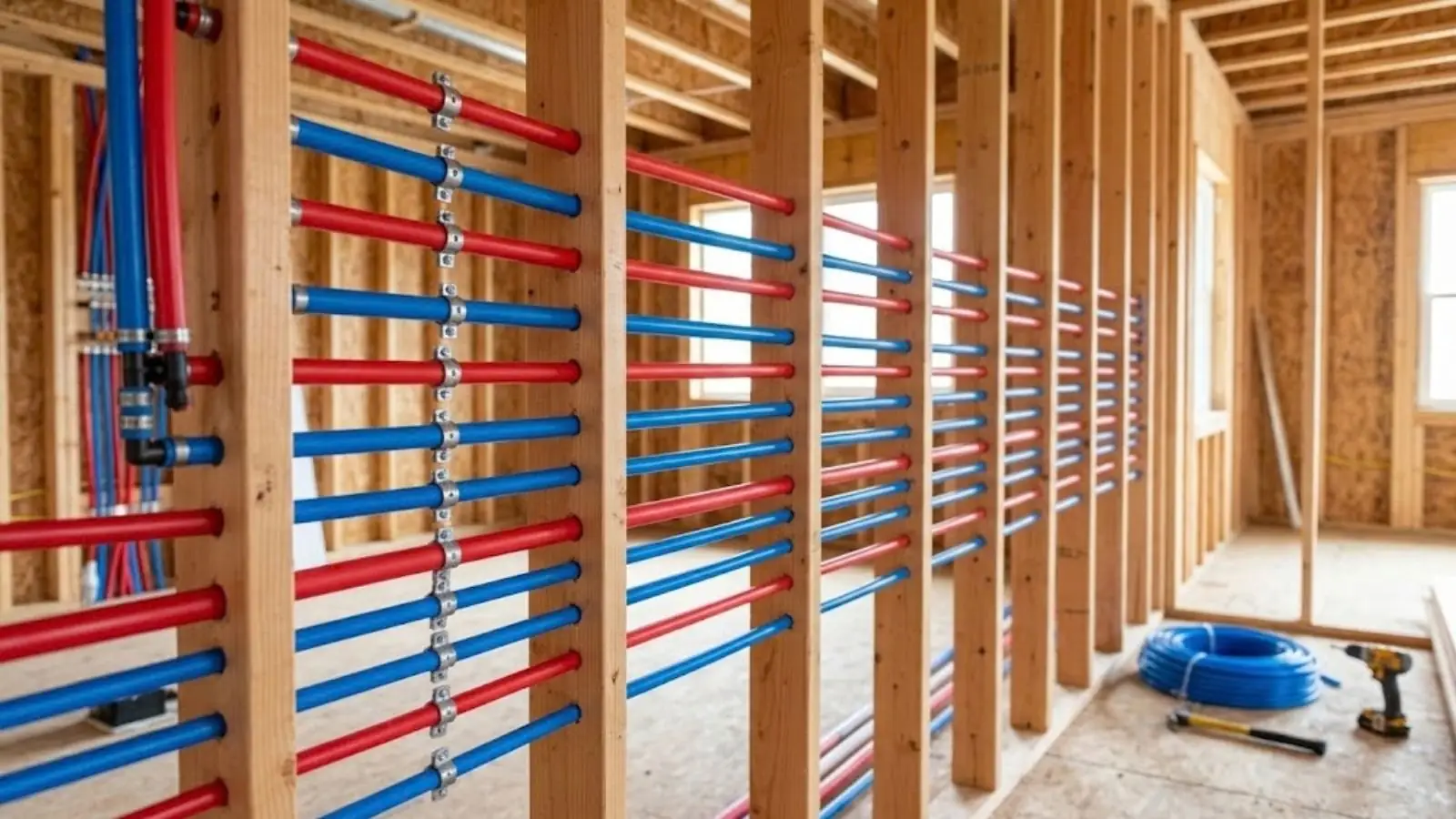
Repiping in Lynn Haven, FL: when patching stops making sense
Repiping means replacing the water supply lines that run through your walls, attic or slab. It is a planned project, and the best time to start is before a pipe floods a room. Homeowners in Lynn Haven, FL usually call after the second or third leak in the same system.
One repair is routine. A pattern of repairs is a sign the pipe itself has reached the end of its life.
- Brown, yellow or rusty water from the taps, especially after the water sits overnight.
- Low pressure at several fixtures that no valve or aerator adjustment can cure.
- Pinhole leaks, green crust or pitting on copper pipe.
- Gray, blue or black flexible plastic pipe, a sign of polybutylene.
- A new leak within a few months of the last repair.
- Wall stains or a rising water bill without a single visible source.
Which pipes cause the most trouble
| Material | Where it shows up | Why it fails |
|---|---|---|
| Polybutylene (gray, blue or black plastic). | Homes built roughly between 1978 and 1995. | Fittings and pipe can crack from the inside without warning. |
| Galvanized steel. | Older homes with threaded gray metal pipe. | Rust builds inside until flow shrinks and the wall thins. |
| Copper. | Homes of many ages. | Pinholes from corrosion, aggressive water or abrasion. |
| CPVC. | Newer remodels and some hot lines. | Can turn brittle with heat and age. |
Your home age is a clue, but not proof. Repairs and additions mix materials, so the plumber checks the pipes where they are visible and in the attic or under sinks.
Pipes failing again and again?
Call the line and ask for a repipe assessment. Describe the leaks you have had and the pipe material if you know it.
Whole-house repipe or a section at a time
Not every home needs everything replaced. A partial repipe swaps the worst run, such as the kitchen and bath lines, and leaves sound pipe alone. A whole-house repipe replaces the supply system from the main to every fixture.
Choose a whole-house job when materials are uniformly old or the leaks keep moving. Choose a section when damage is localized and the rest tests sound. Either way, ask the plumber to explain what stays, what goes and why.
Partial repipe
Replaces one wing, floor or run. Good for a localized failure.
Whole-house repipe
Replaces supply lines throughout. Good for polybutylene or galvanized plumbing.
Slab-routed repipe
Reroutes lines overhead when the buried ones fail. See slab leak repair.
Service line replacement
Replaces the buried pipe from the meter to the house, which a house repipe may not include.
PEX or copper: choosing the new pipe
PEX and copper are the two most common choices for new supply lines today. PEX is flexible, resists corrosion and can often be threaded through walls with less demolition. Copper is rigid, long established and handles heat well, though it takes more labor and can pit in aggressive water.
Your plumber should explain which suits your layout, your water and your budget. Hot lines, outdoor runs and exposed sections can call for different choices than concealed cold lines.
What a repiping job looks like from start to finish
Assess the system
The plumber maps the current lines, tests pressure and checks the main valve and the water heater connections.
Approve a plan
You get the scope in plain terms, including which walls need access and how water will be restored each day.
Shut off and open access
Small drywall openings are cut where pipes run. Furniture and floors are covered.
Run and connect the new pipe
New lines are routed to every fixture and tied into the main and the water heater.
Pressure test and restore
The system is tested before walls close. Drywall patching and paint are scheduled separately.
Permit rules vary, so ask the Lynn Haven building department what your job needs. Repipes usually take days, not weeks, depending on the size of the house.
What affects repiping cost
A repipe is priced to the house, not to a flat rule. These are the factors that decide the number.
- Home size, number of bathrooms and the count of fixtures.
- Pipe material chosen and the length of new line.
- Wall, attic or slab access and how much finish work follows.
- Permit and inspection needs, which vary by job.
- Scope: partial, whole house, or including the water service line.
Insurance rarely pays to replace pipes that are simply old. It may cover resulting water damage from a sudden failure, so check your policy. Want your real number? Call the line and book an assessment.
Pipe materials and the standards behind them
Common repipe materials are copper, made to ASTM B88, and PEX, made to ASTM F876. Both must also meet NSF/ANSI 61 for drinking water contact. Compare warranties, fitting types and the permit your city requires before you choose.
What to do before a repipe starts
- Ask the plumber how long water will be off and plan around that.
- Move furniture and valuables away from the walls where access holes may be cut.
- Shut the main valve and open a low faucet if the plumber has not arrived yet and a pipe is leaking.
- Arrange permits and inspections with the plumber, since local rules vary.
Frequently asked questions
Look under sinks, at the water heater and where the main line enters. Gray, blue or black flexible plastic with stamped markings often means polybutylene. A plumber can confirm.
Yes, when the rest of the system tests sound. A partial repipe replaces the worst section and leaves good pipe in place.
It varies. Water is off for part of each day, and some families stay elsewhere. The plumber outlines the schedule before work starts.
Often, when the cause is rusted or narrowed pipe. A plumber should first rule out a stuck valve, clogged aerator or a failing regulator.
Not always. The service line from the meter to the house is a separate buried pipe, so ask for it to be inspected and priced separately.
It is a planned project. If a pipe is leaking now, call the 24/7 line for burst pipe repair first and plan the repipe afterward.