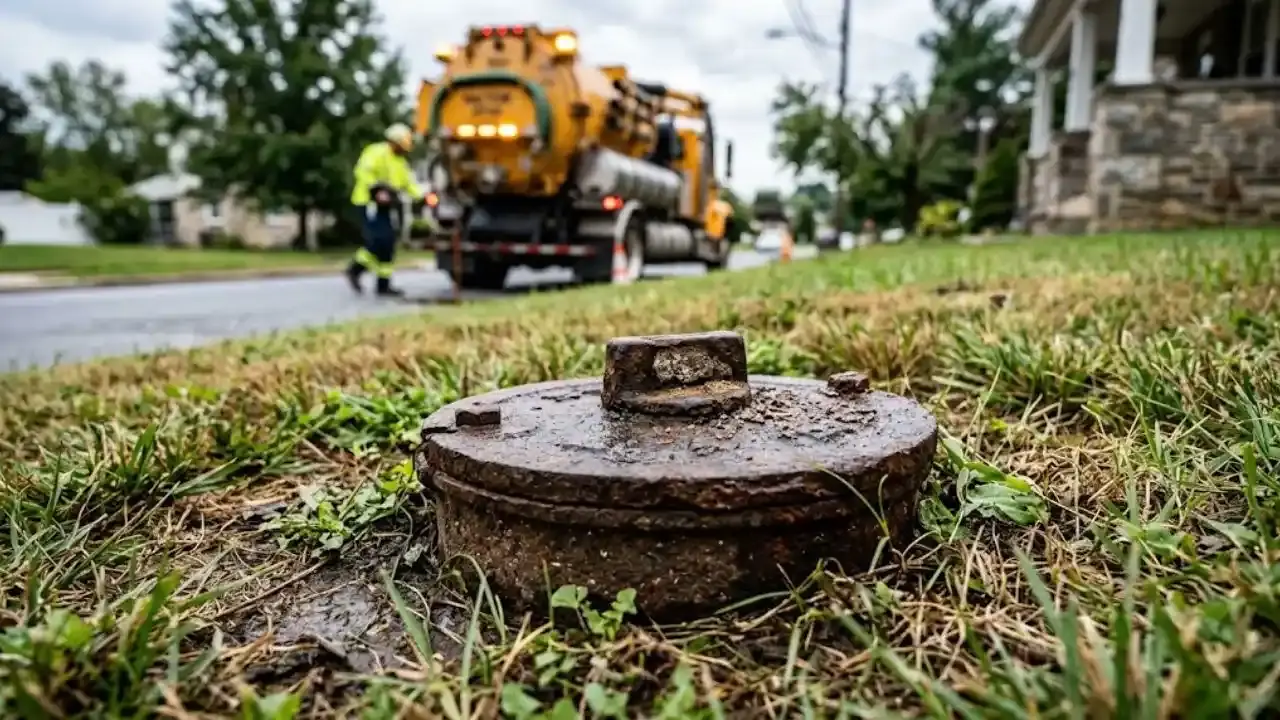
Why heavy rain pushes sewage back up
Short answer: rain fills the sewer faster than it can drain. Water can enter through cracked pipes, loose joints, and low manhole covers, and the system backs up toward the lowest drains. That is usually a basement floor drain in colder states and a tub, shower, or ground-floor toilet in Florida homes.
Two different problems cause it. One is a surge in the public main. The other is a blockage or break in your own private line. The treatments differ, so the first job is working out which one you have.
Is it your pipe or the city's?
| Clue | Points to your line | Points to the public main |
|---|---|---|
| Only one fixture backs up. | Yes, a local clog. | Unlikely. |
| Lowest drains gurgle and rise together. | Possible. | Likely. |
| Neighbors report the same thing. | Unlikely. | Likely. |
| Happens only in heavy rain. | Root-damaged or cracked line. | Stormwater entering the system. |
| Clears when rain stops. | Less likely. | Common. |
If neighbors have the same problem, call the city's sewer plant or Public Utilities Department. If you are the only one on the street, the blockage is probably in your lateral, the pipe from your house to the main.
Backup happening right now?
Call the 24/7 line. Say that sewage is rising and the plumber can plan the right equipment.
What the Lynn Haven record shows
In October 2021, the Florida DEP released a report on a spill of about 500,000 gallons of raw sewage at 12th Street and Virginia Avenue in Lynn Haven. It followed a week of heavy rain. WTVY reported that the city's utility director said stormwater was getting into the gravity sewer collection system and cited damage from hurricane recovery work.
What does that mean for you? Heavy rain can push stormwater into older gravity sewer systems, which is one reason backups follow storms. If you see repeated gurgling only during wet weeks, report it to the city and have your own line checked so you know your side is clear.
The first hour: what to do and what to skip
Stop adding water
No flushing, laundry, or dishwasher. Every gallon you add has nowhere to go.
Keep people and pets out
Raw sewage carries bacteria. Keep children and pets out of the affected room and wear gloves and boots if you must enter.
Turn off power if water is near outlets
Shut off the breaker for wet areas only if you can reach the panel safely and dry.
Call for service
The 24/7 line sends a licensed plumber for a main line clearing and inspection.
Document the damage
Photograph the water level and affected items before cleanup. This matters for any insurance claim.
Skip the chemical drain opener. It will not move a main line blockage and can burn skin and damage pipes. Skip a plunger for a full backup too, since plunging only splashes sewage around.
How a plumber clears and checks the line
For a root or grease blockage, a plumber runs a cable machine with a cutting head, or uses a hydro jet that scours the pipe wall with high-pressure water. A sewer line cleaning visit often restores flow the same day.
After clearing, a sewer camera reveals the cause. It can show roots at a joint, a bellied section holding water, or a crack where groundwater slips in. That picture decides whether cleaning is enough or a repair is needed. See sewer camera inspection for what the footage looks like.
Warning signs that show up before the backup
Most storm backups give notice. A toilet that bubbles when the washing machine drains, a shower that gurgles when a sink empties, and a faint sewer smell near a floor drain all mean air and water are fighting for space in the line.
Slow drains throughout the house, rather than at one fixture, point to the main. Catching these signs early lets you schedule a cleaning before the next storm instead of calling during one.
- Bubbling in a toilet when another fixture drains.
- Several drains slowing down at once, not just one sink.
- A sewer smell in the bathroom or near the cleanout cap.
- Wet or soft ground over the line, with no sprinkler nearby.
- Water standing in the lowest tub or shower after rain.
Find your cleanout, a capped pipe usually outside near the house or in the yard. A plumber can use it to run a camera or cable without pulling a toilet. Keep the area around it clear and free of mulch so it can be reached fast.
What to tell the dispatcher
Give three details when you call: which fixtures are backing up, whether neighbors are affected, and how long it has been happening. Those answers help the dispatcher plan the right equipment, such as a cable machine or a hydro jet.
Mention if the house sits on a slab, since cleanouts and access differ. Also say if anyone has used chemical opener, because a plumber needs to know before opening the line.
Cleanup, insurance, and prevention
Sewage backup is not the same as flood damage, and policies treat them differently. Many standard homeowner policies exclude sewer backup unless you added a rider, so check your policy and call your agent early.
Prevention starts with a clear lateral. A backwater valve, if suited to your home, lets wastewater go out but stops it coming back. Ask a plumber whether one fits your line. Homeowners in Springfield and Southport face the same storm pattern and can use the same checklist.
Frequently asked questions
Rain can overload the public main or find cracks in your own line. If the backup stops when the weather clears, stormwater getting into the system is a likely cause.
Yes, when sewage is rising inside the house. Stop water use, keep people away, and call a licensed plumber. A backup carries health risks and can spread quickly.
Neither helps with a main line problem. Plunging spreads contaminated water, and chemical openers cannot clear a blocked lateral.
Yes. A Florida DEP report from October 2021 described a spill of about 500,000 gallons of raw sewage after a week of heavy rain, and the city's utility director said stormwater was entering the gravity system.
Often not by default. Many policies need a sewer or water backup endorsement, so ask your agent what yours includes.